
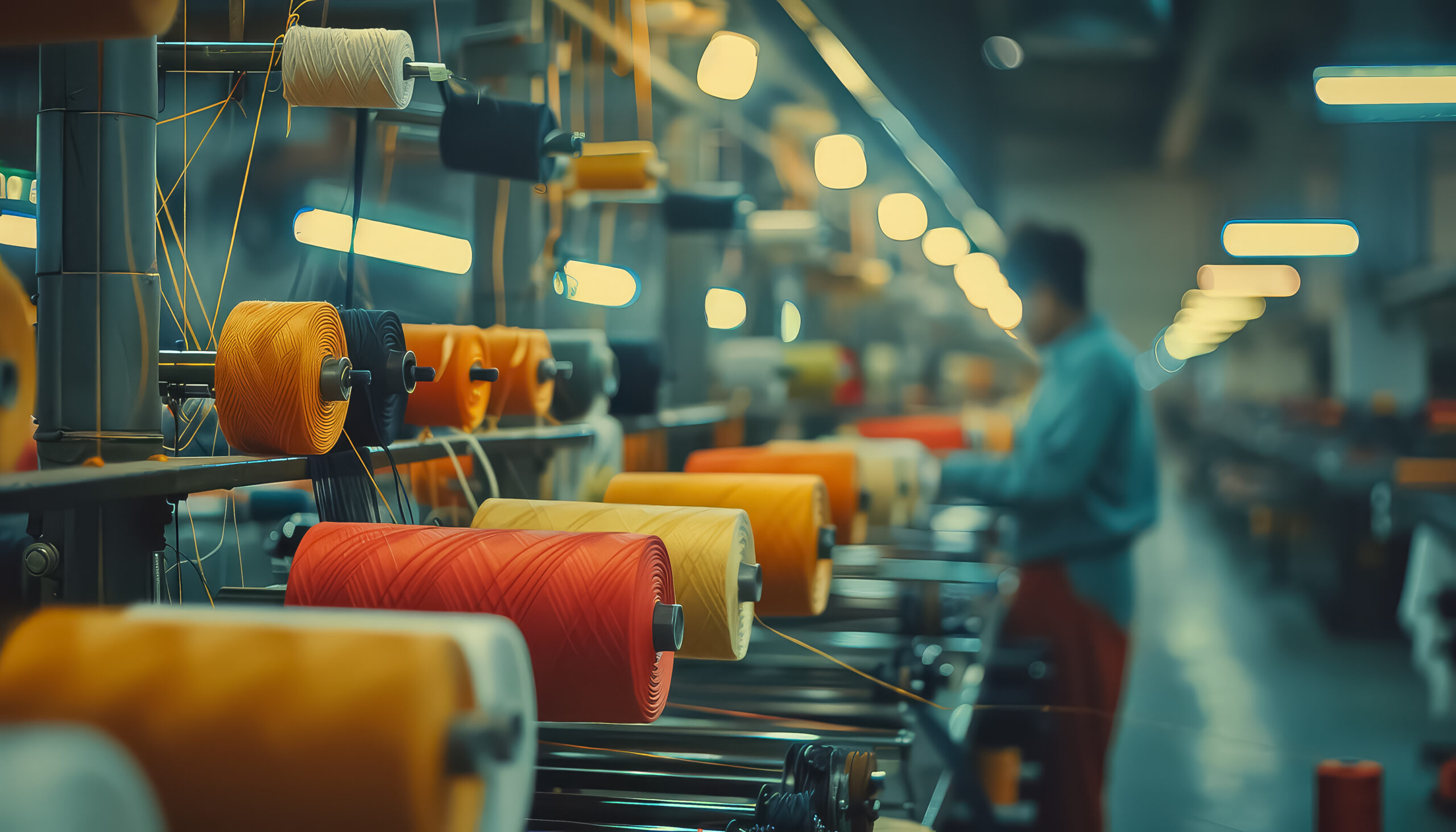
The textile industry is in the middle of a major transformation. Growing global demand, shrinking margins, stricter sustainability regulations and increasingly complex production processes are reshaping how textile manufacturers operate. Mills and garment manufacturers today must manage far more variables than they did even a decade ago.
In this environment, adopting an ERP for textile industry is no longer a “nice to have” system reserved for large enterprises. It has become a core operational requirement for manufacturers that want to stay competitive, profitable and compliant.
This guide explains the most common challenges textile manufacturers face, how an ERP system addresses them, and why Zventory is positioned as a strong solution for textile businesses seeking operational clarity and control.
What Textile Manufacturers Are Struggling With
1. Fragmented Inventory and Roll/Lot Tracking
Textile inventory is fundamentally different from standard discrete manufacturing. Yarn cones, fabric rolls, dyed lots, trims and finished cartons all move through multiple warehouses, job-work locations and production stages.
When inventory is tracked using spreadsheets or disconnected software:
- Fabric rolls go missing or are double-counted
- Dye lots get mixed, leading to quality rejections
- Stockouts trigger emergency purchases at higher costs
Without real-time roll and lot visibility, manufacturers lose control over one of their most expensive assets & raw material.
2. Complex, Multi-Stage Production Flows
Textile production involves tightly linked processes such as spinning → weaving → dyeing → finishing → cutting → stitching. Each stage has its own lead times, dependencies, and quality risks.
A delay in dyeing or rework in finishing can disrupt the entire production plan. Without live WIP visibility and capacity planning, production teams are forced to rely on estimates, increasing the risk of missed delivery dates and inefficient scheduling.
3. Rising Cost and Margin Pressure
Raw-material price volatility, energy costs, labor shortages, and process waste all contribute to shrinking margins in textile manufacturing. Many manufacturers struggle to calculate accurate cost-per-unit because:
- Material usage is not tracked by batch or job
- Process losses are not captured systematically
- Labor costs are estimated instead of recorded
Without accurate costing and variance reporting, management cannot identify where margins are leaking or which products are truly profitable.
4. Traceability, Compliance and Sustainability Requirements
Buyers and regulators increasingly demand transparency. Textile manufacturers are expected to provide:
- Batch and lot traceability
- Audit trails for quality and compliance
- Documentation for sustainability and certifications
Manual records systems make audits slow, recalls risky and compliance expensive. In some cases, lack of traceability can lead to lost contracts with global brands.
5. Inefficient Shop-Floor Data Collection
Many textile plants still rely on paper job cards, manual attendance and delayed data entry. This results in:
- Inaccurate WIP reporting
- Delayed production visibility
- Incorrect labor and piece-rate costing
When shop-floor data is unreliable, the entire ERP and reporting chain becomes ineffective.
Industry analyses consistently show that textile manufacturers are prioritizing technology adoption, traceability and supply-chain resilience to address these challenges.
How an ERP Helps Textile Manufacturers
An industry-aware erp for textile industry centralizes inventory, production, procurement, and finance into a single system of record. This enables manufacturers to replace guesswork with real-time operational data.
For textile businesses, ERP systems deliver:
- Accurate roll and lot tracking across locations
- Multi-level BOM and routing management
- Real-time WIP and production visibility
- End-to-end batch traceability
By connecting shop-floor activity with finance and supply-chain planning, ERP systems help reduce lead times, eliminate data silos, and improve cost control.
Why Choose Zventory for ERP for Textile Industry
Zventory is positioned as a manufacturing-focused ERP platform with features designed to support real production environments — including textile operations with complex inventory and process flows.
Key Capabilities That Matter for Textile Manufacturers
Real-Time Inventory and Batch Traceability
Zventory enables roll-level and lot-level tracking of fabric, yarn, dyed batches, and finished goods across warehouses and external job-work units. This minimizes mix-ups, improves stock accuracy, and simplifies quality holds and recalls.
Production Planning and WIP Visibility
With live work-order tracking and capacity views, production teams can monitor progress at every stage, identify bottlenecks early, and reschedule dynamically when disruptions occur.
Integrated Costing and Variance Reporting
Material consumption, process costs, and labor are captured per job, giving management accurate cost-per-unit visibility. Variance reports help pinpoint inefficiencies, waste, and margin erosion.
Scalable Multi-Location Support
For manufacturers operating multiple mills or outsourcing processes, Zventory synchronizes inventory, purchase orders, and production data across locations — preventing duplicate purchases and excess stock.
These capabilities align closely with textile digitization best practices: centralized data, automated traceability, and real-time production intelligence.
Practical Mapping: Problems → Zventory Features
| Problem Faced by Textile Manufacturers | Zventory Feature | Outcome |
|---|---|---|
| Lost rolls or inaccurate stock | Batch & roll tracking, multi-warehouse ledger | Fewer stockouts, faster fulfillment |
| Unpredictable lead times | Shop-floor WIP tracking & production scheduling | Smoother delivery commitments |
| Rising material costs | Job costing & variance reporting | Better margin visibility |
| Traceability and compliance pressure | Lot traceability & audit trails | Faster recalls, easier audits |
| Manual labor data capture | Digital timecards & piece-rate tracking | Accurate labor costing |
Data Points That Highlight the Urgency
- The global textile and apparel industry is a multi-billion-dollar market facing rising operational complexity.
- Industry research consistently recommends ERP adoption to improve inventory accuracy, production visibility, and cost control — all critical for textile manufacturing competitiveness.
Short Implementation Checklist for Textile ERP
- Map end-to-end production flows (spinning → finishing → cutting).
- Identify SKUs requiring roll or lot tracking (fabrics, dyed batches, yarn).
- Pilot ERP on one production line with shop-floor data capture.
- Measure KPIs such as stock accuracy, on-time delivery, and scrap rate.
- Scale across warehouses, job-work units, and finance integration.
Conclusion
An erp for textile industry acts as the operational glue that connects shop-floor execution with finance, procurement, and supply-chain decisions.
For textile manufacturers dealing with roll tracking challenges, complex production flows, and margin pressure, Zventory offers focused capabilities — batch traceability, WIP visibility, multi-warehouse control, and integrated costing — designed to reduce errors, improve delivery reliability, and protect profitability.
For mills still dependent on spreadsheets and manual processes, even a targeted ERP pilot can deliver measurable improvements in efficiency, visibility, and control within weeks rather than years.
