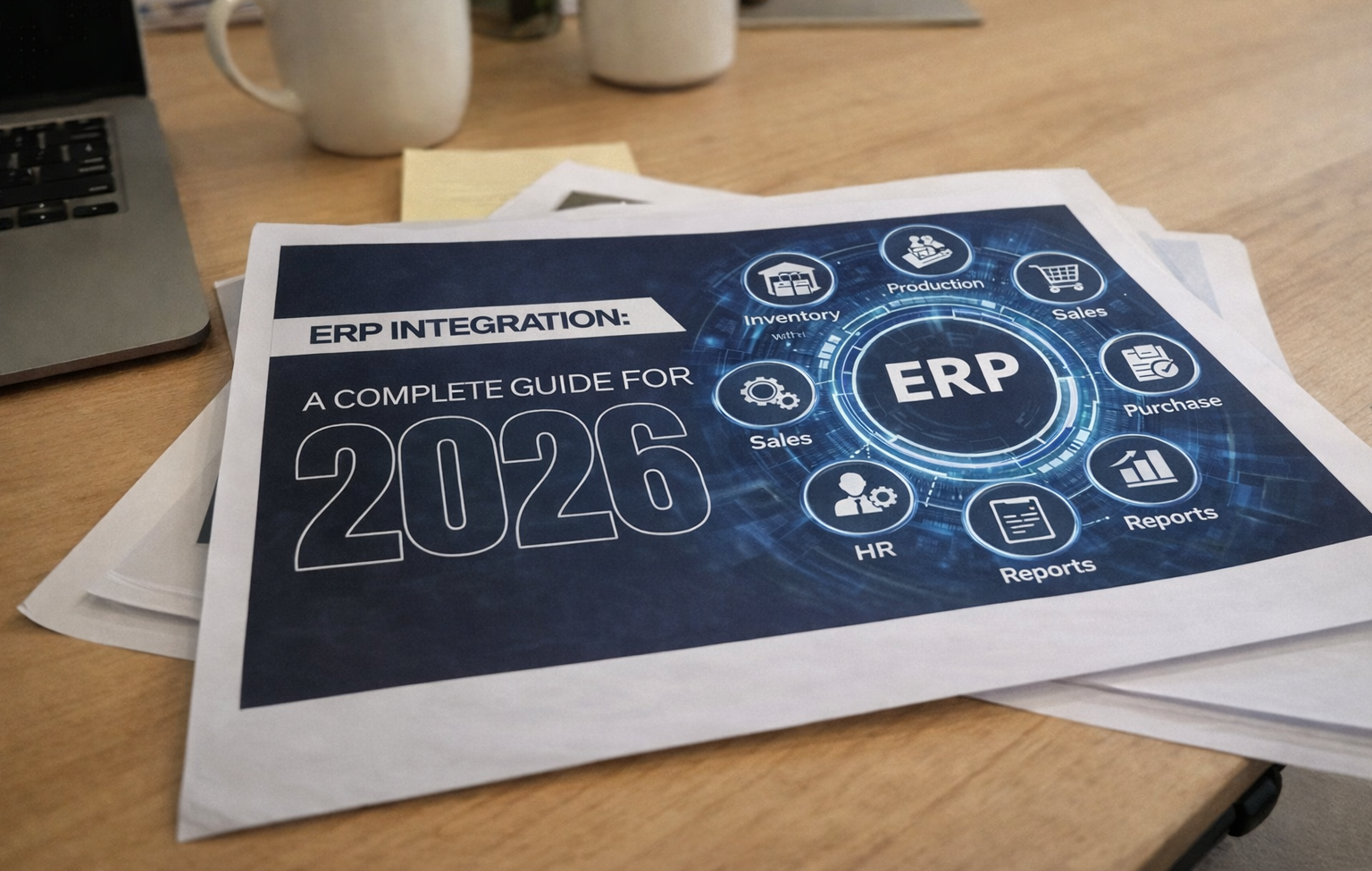
In a growing manufacturing business, productivity is not just about working harder, it’s about working smarter. Many CEOs and operations managers know this feeling well inventory mismatches, delayed purchase orders, disconnected sales data, paperwork overload and teams working in silos. Each small inefficiency quietly drains time, money and momentum.
This is where ERP (Enterprise Resource Planning) software steps in—not as a luxury but as a strategic necessity. Let’s explore how ERP improves productivity in manufacturing businesses and how Zventory ERP Software delivers these benefits more effectively than traditional or fragmented systems.
The Productivity Problem in Manufacturing
Imagine a mid-sized manufacturing company relying on spreadsheets for stock, standalone tools for sales, manual paperwork for purchases and emails for HR approvals. On paper, everything seems manageable. In reality:
• Stock levels are inaccurate
• Sales teams promise deliveries without real-time inventory data
• Purchase orders are delayed or duplicated
• Managers spend hours compiling reports instead of making decisions
Productivity loss doesn’t happen in one dramatic moment—it accumulates silently every day.
ERP changes this story.
How ERP Improves Productivity Across Manufacturing Operations
1. Centralized Data = Faster, Smarter Decisions
One of the biggest productivity boosters of ERP is data centralization. Instead of switching between tools or chasing updates from departments, ERP creates a single source of truth.
With ERP:
• Inventory, sales, purchases, HR and documents are interconnected
• Managers get real-time dashboards
• Decision-making becomes proactive instead of reactive
This means fewer delays, fewer mistakes and more confidence in daily operations.
2. Smarter Inventory Control Reduces Downtime
In manufacturing, productivity stalls when raw materials are missing or when warehouses are overloaded with excess stock.
Zventory’s Stock Management
Zventory’s ERP-driven stock management:
• Tracks inventory in real time
• Prevents overstocking and stockouts
• Improves production planning accuracy
Unlike basic inventory apps, Zventory connects stock directly with sales and purchase data. This integration ensures your production line never stops due to miscalculations.
3. Sales Tracking That Aligns with Operations
A common productivity gap occurs when sales teams operate independently from manufacturing realities.
Zventory’s Sales Tracking
With ERP-based sales tracking:
• Orders reflect real inventory availability
• Delivery timelines become reliable
• Revenue forecasting improves
Zventory ensures sales commitments are aligned with production capacity—reducing rework, customer dissatisfaction and internal friction.
4. Purchase Management That Eliminates Bottlenecks
Manual purchasing slows everything down—from approvals to vendor coordination.
Zventory’s Purchase Management
Zventory automates the purchase lifecycle:
• Auto-generated purchase orders based on stock levels
• Faster approvals
• Better supplier coordination
Compared to standalone procurement tools, Zventory integrates purchasing directly with stock and production planning—saving time and preventing costly delays.
5. Streamlined Product & Production Management
Manufacturing productivity depends heavily on how well production workflows are managed.
Zventory’s Production Management
This ERP module:
• Aligns raw materials, labor and timelines
• Tracks production stages
• Improves output forecasting
Zventory goes beyond basic production tracking by connecting production data with sales demand and inventory availability—ensuring smoother workflows and higher throughput.
6. Paperless Document Management Saves Time
Invoices, compliance documents, purchase records and HR files often consume unnecessary administrative hours.
Zventory’s Document Management
With ERP-powered document management:
• All documents are securely stored in one place
• Instant access across departments
• Reduced dependency on manual filing
This not only boosts productivity but also improves compliance and audit readiness.
7. HR Management That Empowers Teams
People are the backbone of productivity. Without proper HR systems, workforce inefficiencies go unnoticed.
Zventory’s Human Resource Management
Zventory’s ERP HR module helps:
• Track attendance and performance
• Simplify payroll and leave management
• Improve workforce planning
Unlike separate HR apps, Zventory connects workforce data with production and operations—helping managers optimize labor utilization.
Why Zventory ERP Outperforms Other Applications
Many businesses try to patch productivity gaps using multiple software tools. The result? More complexity, more integrations and more confusion.
Zventory stands out because:
• It offers a fully integrated ERP ecosystem
• Designed specifically for operational-heavy businesses like manufacturing
• Eliminates data silos across departments
• Scales as your business grows
Instead of juggling 5–6 disconnected apps, Zventory provides one unified platform that enhances productivity across the entire organization.
The Real Productivity Shift: From Chaos to Control
ERP doesn’t just improve productivity—it transforms how businesses operate. CEOs gain visibility. Operations managers gain control. Teams gain clarity.
With Zventory ERP:
• Time wasted on manual tasks is reclaimed
• Errors are minimized
• Decisions are faster and data-driven
In a competitive manufacturing landscape, productivity isn’t optional—it’s survival. ERP makes it sustainable.
Conclusion
Productivity improvement isn’t about pushing teams harder—it’s about giving them better systems. ERP software enables manufacturing businesses to work efficiently, predict accurately and grow confidently.
If you’re looking for an ERP solution that truly understands manufacturing challenges and solves them holistically, Zventory ERP Software offers a smarter, more connected path forward.